The elusive megalithic tombs that survive around Solva are part of the oldest firm evidence of people living in communities in the whole of Pembrokeshire. The tombs – which now appear as stone uprights, sometimes with a capstone – exist all over the county: Pentre Ifan (above Newport), Longhouse (Abercastle) and Arthur’s Chamber (St Davids Head) are all examples, and date from 2500–3000 BC.
Little further evidence of occupation survives until we reach the ‘Iron Age’ forts – 500 BC, or thereabouts – such as the three specimens to be found on Solva’s Gribin headland, and those at nearby Whitchurch and Porth Y Rhaw – and generally along the coastal path, where they are a regular feature.
Its harbour has always provided a fine anchorage and base for fishing and other seagoing activities, but Solva’s existence as a distinct village first emerges in the early 18th century. At that time, it became a shipping port involved in the transportation of corn to other areas of Wales and Bristol – and of culm and limestone into the area to be burnt, the resulting lime being used on local fields to counteract the natural acidity of the soil.
The fabrication, transportation and construction of the original Smalls Lighthouse and – later, in 1856–61 – its stone-built granite successor had a great effect on Solva. The associated increase in population among service industries, trades etc. resulted in the forming and opening of five new chapels in the village between 1798 and 1864, and the construction of the new church of St Aidan in 1879 as a branch of the senior parish church at Whitchurch. The National Church of England opened a school in 1834, followed by the Welsh and non-sectarian school in 1844
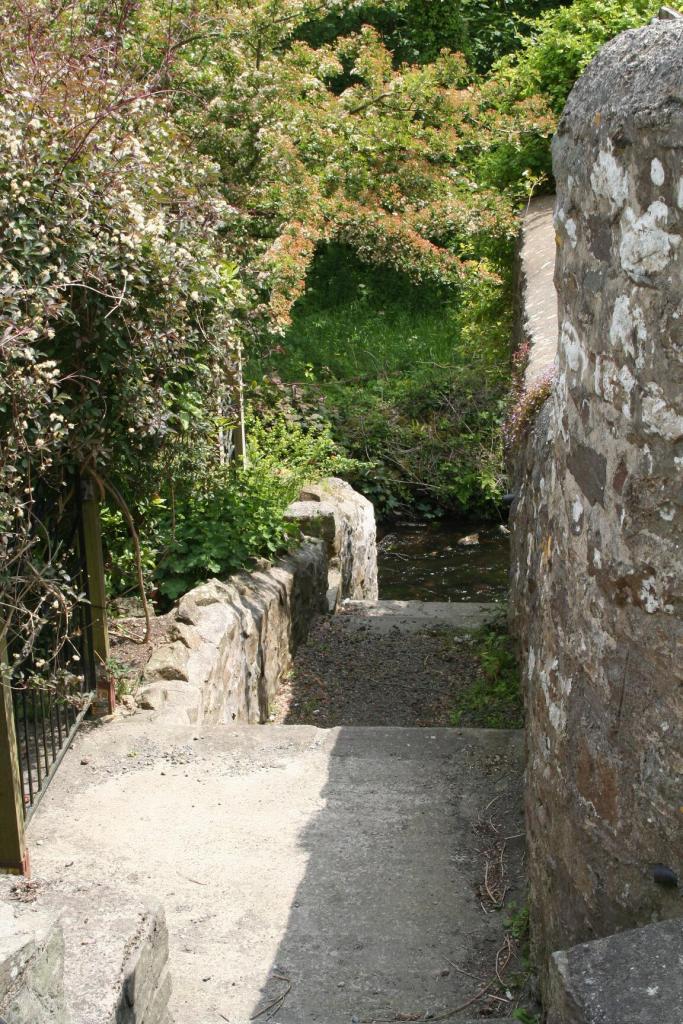
What is a gidel? You will not find the word in any Welsh dictionary, and will only discover it used in certain areas – notably, around Solva and St Davids. It is, in fact, a narrow passage between houses or garden walls – similar to what people in the industrial Northwest of England know as a ginnel. In Solva you will find that Prendergast has six such features, and the Cwm boasts two. Gidels were always open to the public, but with the passing of time many have been lost.
Each one gave access to the river for washing clothes, disposing of slops and waste, and collecting water for gardens. Solva’s Prendergast gidels were mostly used by homes situated on the left of the road as you head out of the village towards Middle Mill; houses on the right already had access to the river via their gardens. The arrival of sewage pipes, installed by Italian prisoners of war, and more general infrastructure in 1945 heralded the end of the River Solva being used for waste disposal. As a consequence, by the late 1940s the village’s gidels had become redundant.
During the 1950s and 60s, many local children used the deteriorating lanes, with their ivy-covered walls, as play areas. Enterprising boys ‘tickled’ trout in the river, and many apples were picked from overhanging trees.
Restoration of the Main Street Gidel, alongside the Ship Inn in Lower Solva, took place in 2013. The community-led project involved Solva Community Council, the Pembrokeshire Coast National Park Authority, Pembrokeshire County Council and Marston’s Brewery. The work included renovation of the gidel’s surface, drainage improvement, and repointing and rebuilding to some of the stone-faced walls on either side of the passageway. You will find a plaque at the entrance explaining the history of a gidel.
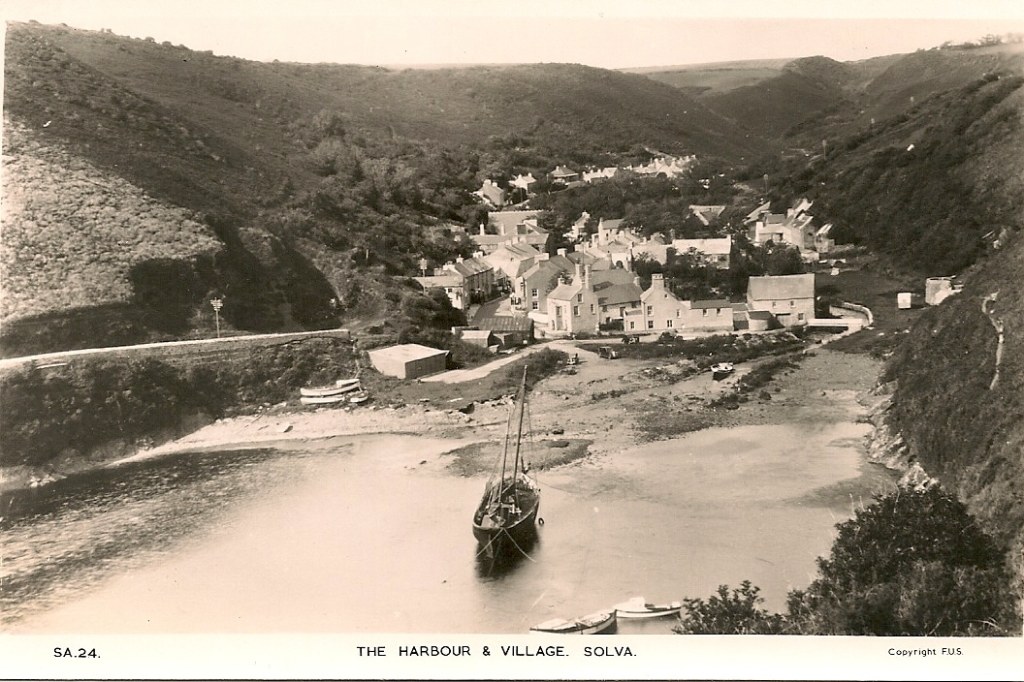
One of the strangest of all Solva’s seafaring stories is that by 1848, soon after the village’s tally of trading ships had reached 30, it was possible to buy a passage from here direct to New York!
Berths were advertised for £3 a head, with a half-price ticket offered for those under 14 years of age and infants free. This was inclusive of water, fuel and sleeping places for a voyage that, in those days, could take up to 17 weeks.
 Home
Home 